 About Dates
Medjool
LARGE & SWEETLarge, sweet and succulent, Medjool is one of the most prized date cultivars in international trade. Its caramel-like flavour, soft texture and generous size have made it a global favourite for snacking, gifting and hospitality.
-
Origin Tafilalt, MoroccoTop-Producing Member States Jordan, Palestine, Morocco
-
Size Very large · 20–30 gColour Amber to dark brown
-
Texture Soft and moistHarvest season August – October
Characteristics
 Flavour
Rich caramel and honey notes with a subtle hint of cinnamon.
 Texture
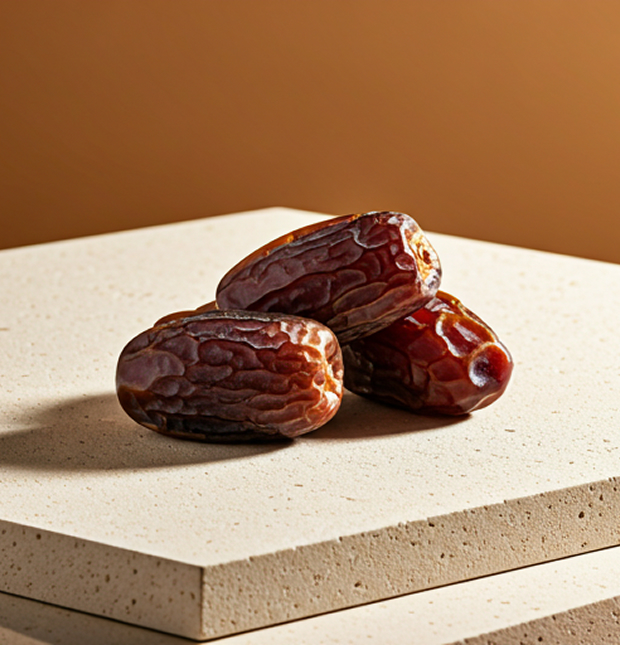
Soft, moist and dense flesh that melts in the mouth, with a thin, slightly wrinkled skin.
 Appearance
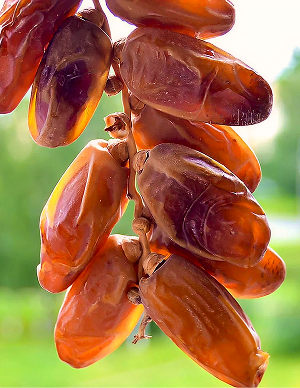
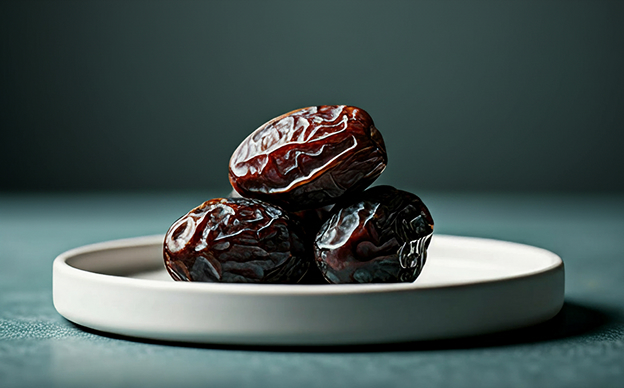
Large, oblong oval fruit, amber to dark brown, with a glossy, wrinkled skin.
History & Origin
Medjool originated in the Tafilalt oasis of southern Morocco, where it was long regarded as a date fit for royalty. In 1927, as Bayoud disease spread through the region’s palm groves, eleven offshoots were sent to the United States — the beginning of much of today’s commercial Medjool production.
Today the cultivar is grown across the Middle East, North Africa and the Americas, and is valued in international trade for its size, sweetness and long shelf life.
These dates originated in the Tafilalt oasis of southern Morocco, where generations of growers prized their large size, soft texture and rich sweetness. Long associated with hospitality, they were regarded as a fruit fit for royalty. In 1927, as Bayoud disease threatened Morocco’s palm groves, eleven Medjool offshoots were taken to the United States. Their descendants helped establish commercial production in California and Arizona. Today, Medjool palms grow in hot, dry regions around the world, continuing a tradition rooted in North Africa’s oasis gardens.
Typical values per 100 g
- Energy 277 kcal
- Carbohydrates 75 g
- of which sugars 66 g
- Dietary fibre 6.7 g
- Potassium 696 mg
- Magnesium 54 mg
Source: USDA FoodData Central (Medjool dates). Values vary by origin and ripeness.
Common Uses
 Fresh snacking
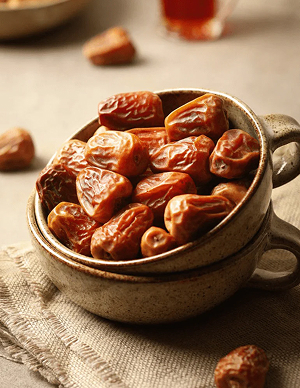
Enjoyed on its own as a naturally sweet, energy-rich snack.
 Gifting & hospitality
A traditional welcome for guests and a popular seasonal gift.
 Stuffed dates
Filled with nuts, cheese or chocolate for premium confectionery.
 Baking & date paste
Blended into pastes, syrups and baked goods as a natural sweetener.